A psychologist and pet owner on travel anxiety in pets and their owners: why it happens, how it spreads between you, and the calm, practical ways to ease it.
Pet Travel Anxiety & Wellbeing
Most travel guides for pet owners stop at the paperwork. This section is about the part almost no one talks about: the worry. The night before a flight, watching your dog pant in a carrier he’s unsure about, wondering whether your cat will cope, second-guessing every rule — that quiet anxiety is real, and it belongs to both ends of the leash.
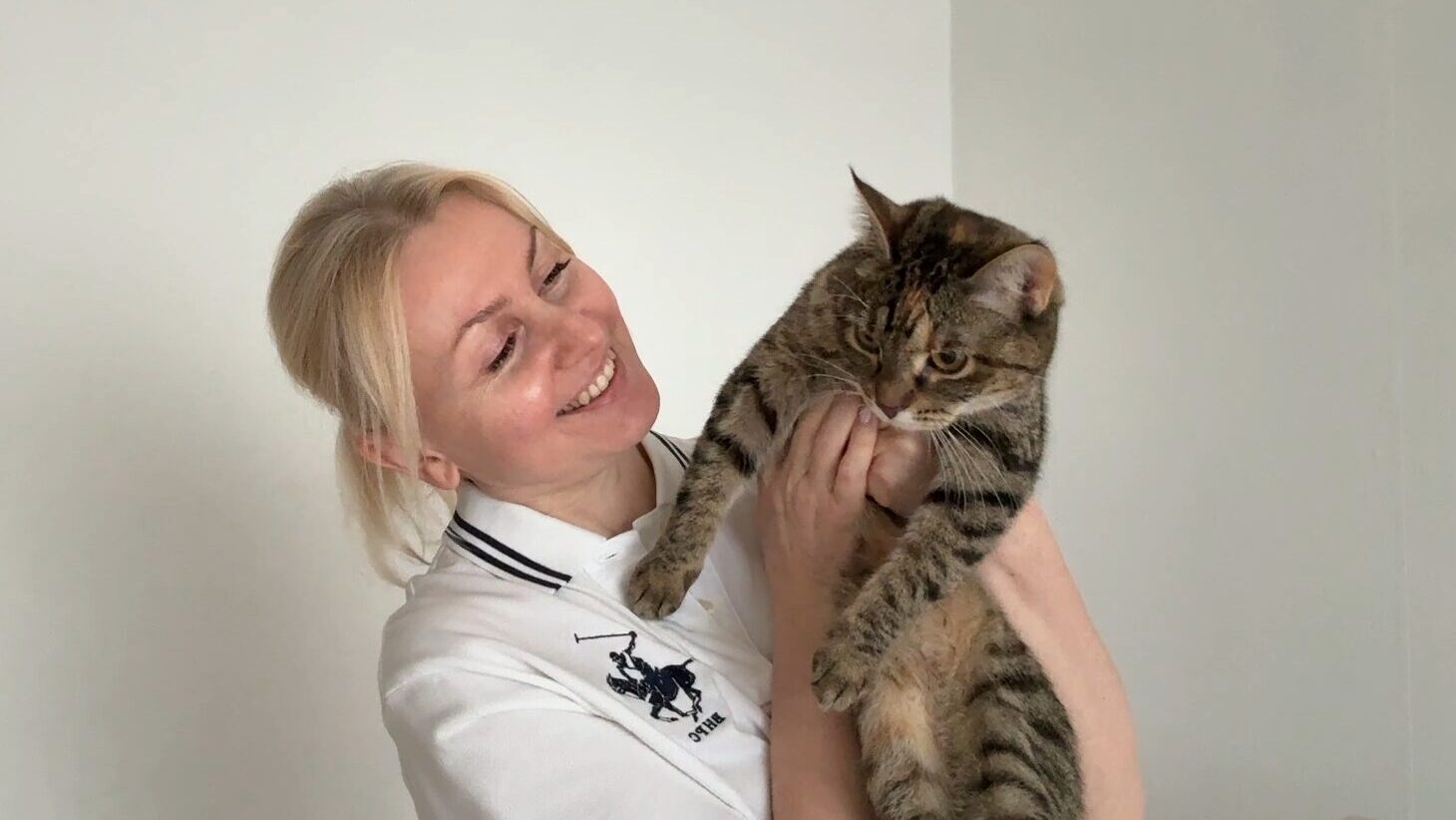
I’m Lana, a psychologist and the owner of a Pomeranian and a cat. We travel together, so I know this feeling firsthand and I understand professionally why it happens. This is where I share what actually helps, drawn from both the science of stress and our own trips.
Why pets and owners feed each other’s anxiety
Animals can’t be told what a flight is. From their point of view, the day breaks every routine they know, and they can’t control any of it and unpredictability plus loss of control is, in plain terms, what stress is. On top of that, dogs and cats are remarkably attuned to their owners: they read your voice, your breathing and your body language. So your tension doesn’t stay yours — it travels straight down the leash. That’s the hard truth and also the useful one, because it means calming yourself is one of the most effective things you can do for your pet.
The single most important idea
The work that matters happens before travel day, not at the airport. You can’t reason a pet into calm in a busy terminal but you can spend the weeks beforehand making sure that in an unfamiliar, chaotic day, one thing stays safe and familiar: the carrier they already trust. Almost everything below comes back to that one principle — replace unpredictability with routine, and panic with a plan.
Start here, by situation
Calming your pet and yourself. The core toolkit — carrier familiarization, stable routines, managing your own night-before dread, and why sedation isn’t the answer. → How to keep your pet and yourself calm when flying
Flying long-haul with a cat. Cats hide stress in ways that fool their owners. What a long flight really asks of a cat, and how to lower the strangeness for a territorial, routine-driven animal. → How to travel with a cat on a long-haul flight
Snub-nosed (brachycephalic) breeds. For Pugs, Bulldogs, Boxers, Persians and others, the worry is sharper because the physical stakes are higher. Why these breeds need extra caution and the lowest-risk way to fly them. → Flying with a brachycephalic dog or cat
A note on what I do and don’t do here
I’m a psychologist, not a veterinarian. What I offer is an honest, science-aware understanding of stress and anxiety in your pet and in you and practical ways to ease it. For anything touching your pet’s physical health, medication or fitness to fly, your veterinarian has the final word. The two go together: a calm plan from me, a medical green light from your vet.
If travel with your pet has ever felt more stressful than it should, you’re in the right place and you’re far from alone.
Can travel anxiety actually harm my pet?
Prolonged stress is hard on any animal, which is exactly why reducing it matters, but the goal is to lower stress, not to eliminate every trace of it, which isn’t realistic.
Does my own anxiety really transfer to my pet?
Yes. Animals are highly sensitive to their owner’s emotional state, so your calm genuinely steadies them — it’s a tool, not just a mood.
Is it ever kinder not to fly at all?
Sometimes. For a frail, elderly or extremely anxious animal, the honest answer may be that this trip isn’t right for this pet. Weighing that is part of caring well.
Written by Lana, psychologist and pet owner. Last updated: May, 2026.